



See how real attacks unfold, end to end
Our exercises demonstrate how adversaries chain techniques together: a misconfigured service leads to credential access, which enables lateral movement, which reaches critical business functions.
Expose the Gaps Before Real Attackers Do
From red team exercises to identity security assessments, we simulate real adversary behavior across your full attack surface, then help you close the gaps we find.
The Value
Understanding your exposure requires thinking like an attacker. We demonstrate real attack paths, then work with your team to eliminate them.
Our exercises demonstrate how adversaries chain techniques together: a misconfigured service leads to credential access, which enables lateral movement, which reaches critical business functions.
Beyond validating whether controls exist, offensive testing reveals whether your security operations can detect sophisticated activity, respond effectively, and make good decisions under pressure.
Our services
Scenario-driven, research-informed engagements focused on demonstrating real business impact.

Full kill-chain exercises from external reconnaissance through objective achievement. Assume breach assessments and TIBER/DORA-compliant testing. We replicate how sophisticated threat actors actually operate.
Your outcomes
Understand not just your vulnerabilities, but how an attacker would actually exploit them to achieve business impact.
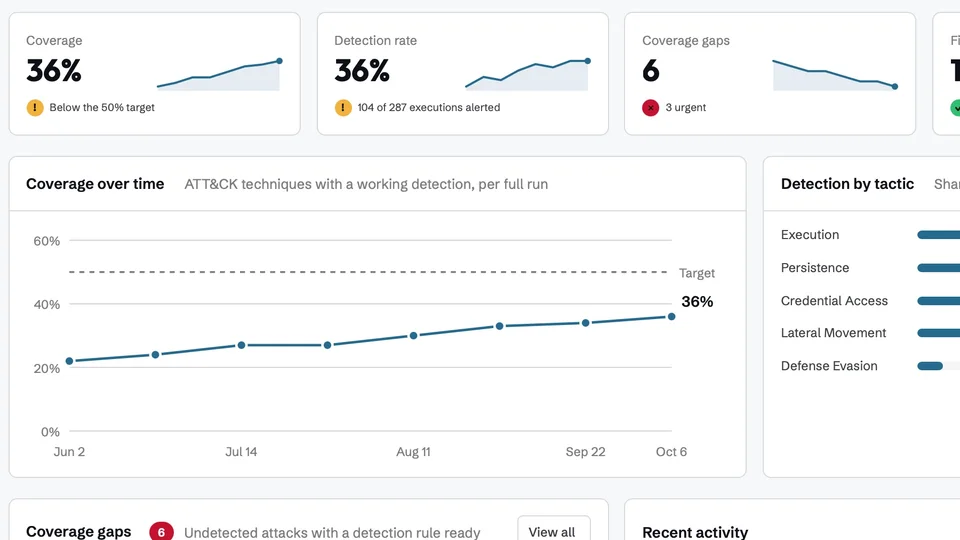
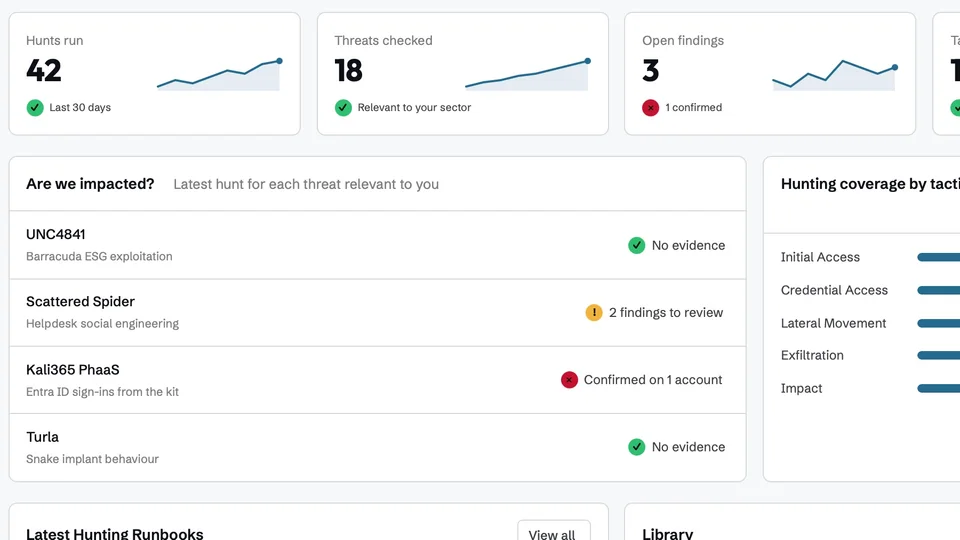
Know which attacks your SOC can detect, and which slip through unnoticed. MITRE ATT&CK mapping included.
Prioritized recommendations based on demonstrated attack paths, not theoretical risk scores.
Our Difference
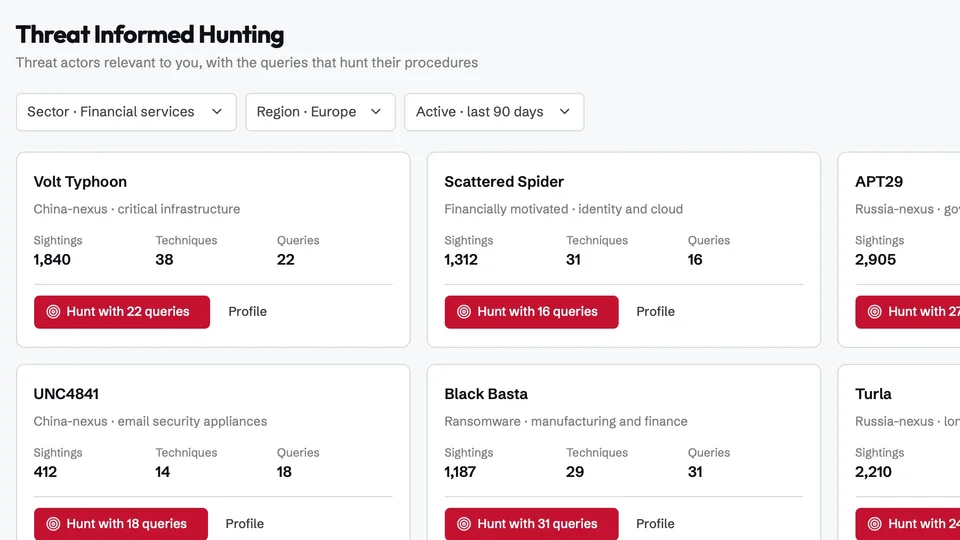
Our attack techniques come from continuous research, analyzing real breaches, reverse-engineering malware, and developing TTPs that reflect how adversaries actually operate today.
We demonstrate what compromise means: data exfiltration, business process disruption, or access to critical functions. Impact that resonates with executive stakeholders.
Every offensive engagement can include a purple team component. We don't just find weaknesses, we help you fix them with detection rules and response improvements.
Our operators have years of experience in offensive security, threat research, and adversary simulation. No junior consultants running automated tools.
FAQ
Typical engagements run 4-8 weeks for full exercises, 2-4 weeks for assume-breach assessments. Regulatory exercises (TIBER/DORA) may require longer timelines depending on scope and coordination requirements.
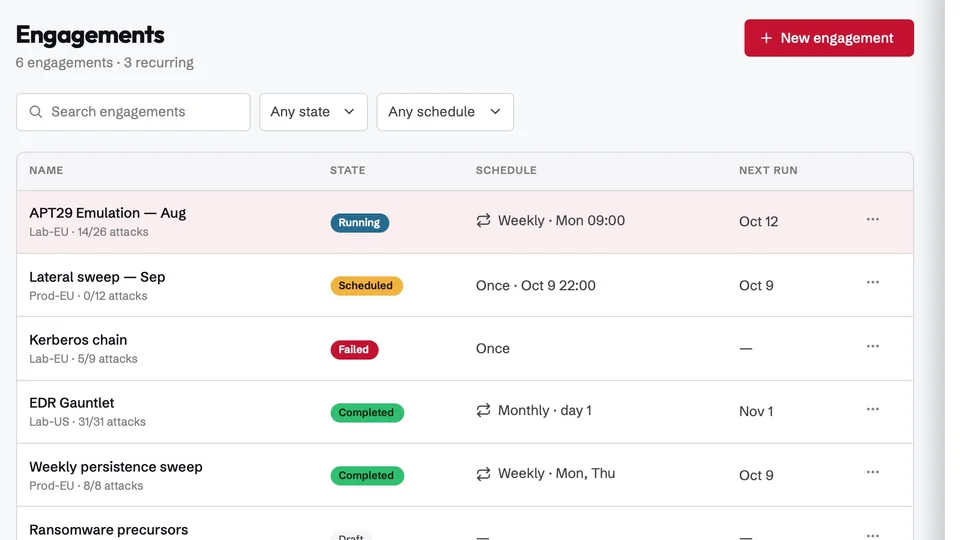
Continuous purple teaming is an ongoing, collaborative security validation model where offensive testing and detection engineering run as a sustained program rather than a one-off exercise. Instead of a single point-in-time assessment, we continuously simulate real-world attack techniques, validate that your detections fire correctly, and refine detection rules as new threats emerge. This keeps your detection coverage aligned with the evolving threat landscape and APT tactics, turning purple teaming from a periodic project into a measurable, always-on capability.
Typical customers resource at least 20% of an internal full time equivalent or 1 day a week over the engagement timeframe (IT Security or IT Operations knowledgeable). Depending on the customers internal processes for onboarding external consultants and for governance and reporting reviews individual engagements may vary.
Penetration testing focuses on finding vulnerabilities in specific systems. Red teaming simulates complete attack scenarios to test your overall security posture, including detection, response, and decision-making capabilities.
Yes, within agreed scope and rules of engagement. We operate under strict legal agreements and coordinate with designated points of contact throughout the exercise.
Absolutely. Every red team exercise can include a purple team component where we develop detection rules alongside the engagement. This is our recommended approach for maximizing value.
We specialize in Active Directory, Microsoft Entra ID (Azure AD), and Okta. Our assessments cover misconfigurations, attack paths, privilege escalation vectors, and identity-based lateral movement.
Red teams simulate attacks with stealth to test overall security posture. Purple teams operate collaboratively to specifically improve detection and response capabilities.
Yes. We provide detailed reports that meet requirements for threat-led penetration testing, compliant with TIBER-EU and DORA, and other regulatory frameworks. Reports include executive summaries, technical findings, remediation guidance and continuous detection validation.
We simulate real-world attack scenarios including initial access, lateral movement, privilege escalation, data exfiltration, and persistence. Scenarios are based on current threat intelligence and MITRE ATT&CK framework.
We establish clear rules of engagement, coordinate with your IT team, and use non-destructive techniques. All testing is scheduled during approved windows with proper safeguards in place.
Comprehensive reports including executive summary, technical findings, attack narratives, evidence artifacts, and prioritized remediation recommendations. Purple team engagements also include detection rules and playbooks.
Take the Next Step
Let's discuss your threat model, testing objectives, and how offensive engineering can strengthen your security posture.